Innovative Ceramic Weld Backing Solutions for Modern Welding
Understanding Ceramic Weld Backing Solutions
The Role of Ceramic Materials in Welding
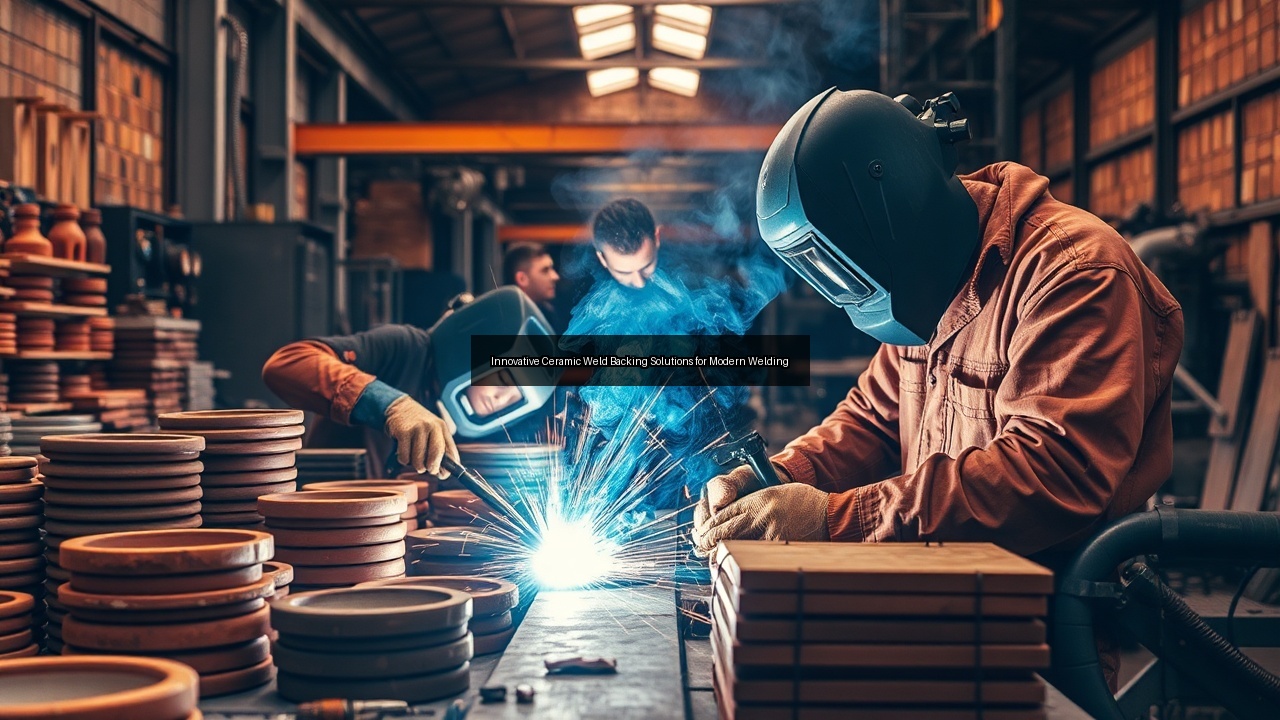
Ceramic materials play a crucial role in modern welding, particularly as weld backings. These materials, derived from clay and other inorganic compounds, possess unique properties that enhance the welding process. Ceramic weld backing offers thermal stability, resistance to oxidation, and the ability to withstand extreme temperatures. When welders employ ceramic backings, they create a stable environment for the weld pool, ensuring that the metal remains molten for the necessary duration. This capability allows for cleaner and stronger welds, reducing defects and ensuring structural integrity. The combination of ceramics and welding techniques, such as TIG welding, showcases innovative approaches that improve overall welding performance.
Types of Ceramic Weld Backings: An Overview
Various types of ceramic weld backings are available, each designed to meet specific welding needs. Common forms include ceramic backing strips, ceramic backing tapes, and ceramic weld backing foils. Ceramic backing strips provide a rigid support structure, enabling the welder to maintain consistent weld penetration. Meanwhile, ceramic backing tapes offer flexibility and adaptability in complex weld configurations. These tapes can be applied easily to different surfaces, enhancing their versatility. Additionally, ceramic weld backing foils serve as an effective barrier against contaminants, ensuring cleaner welds. Each type has distinct advantages, and selecting the right ceramic weld backing depends on the specific requirements of the welding application.
Advantages of Using Ceramic Weld Backings in Modern Welding
Integrating ceramic weld backings into the welding process yields numerous advantages. First, they significantly improve the quality of welds by reducing the likelihood of defects such as porosity and lack of fusion. The thermal insulation properties of ceramics help maintain optimal temperatures in the weld pool, promoting better fusion between the welding rod and the base materials. Second, ceramic weld backings are cost-effective in the long run. They reduce the need for additional filler materials and minimize rework caused by poor weld quality. Finally, the environmental impact of ceramic materials is generally lower compared to traditional metal backings, aligning with modern sustainability goals. Together, these benefits make ceramic weld backing an appealing choice for today’s welders.
Innovative Applications of Ceramic Weld Backing
Ceramic Backing Strips and Their Benefits
Ceramic backing strips have emerged as a staple in the welding industry, providing significant benefits to welders. These strips are designed to support the weld pool, promoting a stable environment during the welding process. The rigidity of ceramic backing strips allows for precise control over weld penetration and bead shape, leading to enhanced weld aesthetics and strength. Additionally, they withstand high temperatures, preventing warping or degradation during the welding process. The ease of application further simplifies the workflow for welders, reducing preparation time and ensuring consistent results. As industries increasingly seek high-quality welds, the adoption of ceramic backing strips continues to rise, making them an essential tool for modern welding operations.
Ceramic Weld Backing in TIG Welding
TIG welding, known for its precision and control, benefits immensely from the use of ceramic weld backing. In this process, the welder uses a non-consumable tungsten electrode to produce the weld, and the addition of ceramic backing enhances the overall stability of the weld pool. The thermal insulation properties of ceramics play a critical role, allowing for prolonged control over the molten metal. Welders appreciate the cleaner, more uniform welds achieved through this combination. Furthermore, ceramic backing provides a barrier against contamination from oxygen and other atmospheric elements, which can negatively impact weld quality. This synergy between TIG welding and ceramic materials exemplifies the innovative evolution of welding technologies.
Case Studies: Successful Implementation of Ceramic Weld Backing Solutions
Several industries have successfully implemented ceramic weld backing solutions, showcasing their effectiveness in real-world applications. For example, manufacturers in the aerospace sector have reported significant improvements in weld integrity and fatigue resistance when utilizing ceramic backing strips. A case study from a renowned aerospace company highlighted the reduction in defects and subsequent rework due to the use of ceramic materials. Similarly, the automotive industry has embraced ceramic weld backing, particularly in the assembly of lightweight structures. The combination of advanced ceramics and welding techniques has allowed these manufacturers to achieve higher performance standards while maintaining cost efficiency. Such success stories underscore the transformative potential of ceramic weld backings in various industrial applications.
Comparative Analysis of Ceramic vs. Traditional Weld Backings
Performance Metrics: Ceramic vs. Metal Backings
A comprehensive analysis reveals distinct performance differences between ceramic and traditional metal weld backings. Ceramic materials provide superior thermal insulation, ensuring that the heat generated during welding remains concentrated in the weld pool. This characteristic results in improved penetration and less distortion of the base materials. Metal backings, while functional, can lead to excessive heat loss, resulting in weaker welds. Additionally, ceramics help minimize the risk of weld defects, such as cracking and porosity, which are often more prevalent with metal backings. Overall, the performance metrics favor ceramic weld backings, positioning them as a more reliable option for achieving high-quality welds.
Cost-Effectiveness of Ceramic Weld Backings
Cost-effectiveness is a vital factor in choosing welding materials, and ceramic weld backings excel in this area. Although the initial investment in ceramic materials might be higher than traditional options, the long-term savings are substantial. The reduction in rework due to fewer defects translates into significant cost savings over time. Additionally, ceramic backings minimize the need for additional filler materials, further reducing operational costs. Industries that prioritize quality and efficiency find that the return on investment for ceramic weld backings justifies the initial expense. As the welding market becomes increasingly competitive, cost-effectiveness will continue to drive the adoption of ceramic solutions.
Environmental Impact of Ceramic Backing Materials
The environmental impact of welding materials is a growing concern, and ceramic weld backings offer a more sustainable option compared to traditional metal backings. Ceramics, derived from natural materials like clay, have a lower carbon footprint during production. Furthermore, their durability means they can withstand multiple welding cycles without degradation, reducing waste. Traditional metal backings often require recycling or disposal after use, contributing to environmental challenges. As industries strive to adopt more sustainable practices, the use of ceramic weld backings aligns with these goals, offering a viable solution that balances performance with environmental responsibility.
Future Trends in Ceramic Weld Backing Technology
Emerging Materials and Techniques in Ceramic Welding
The landscape of ceramic weld backing technology is continuously evolving. Emerging materials, including advanced composites and hybrid ceramics, promise to enhance the performance of weld backings further. These innovations focus on improving thermal resistance and compatibility with various welding processes, including MIG and TIG welding. Techniques such as additive manufacturing are also being explored to create custom ceramic backings tailored to specific applications. As research and development in ceramics advance, the welding industry can anticipate even greater improvements in weld quality and efficiency, ensuring that ceramic materials remain at the forefront of welding technology.
The Role of Companies like ESAB and Gullco International
Companies like ESAB and Gullco International are leading the charge in advancing ceramic weld backing technologies. ESAB, known for its innovative welding equipment and materials, actively invests in research to enhance ceramic backing solutions. Their commitment to quality ensures that welders have access to the best materials for optimal performance. Similarly, Gullco International focuses on developing advanced welding automation technologies that incorporate ceramic materials. Their expertise in the field allows them to create systems that maximize the benefits of ceramic weld backings, ultimately improving productivity and weld quality for users. The contributions of these companies play a pivotal role in shaping the future of ceramic welding solutions.
Integration of Advanced Ceramics with Welding Technologies
The integration of advanced ceramics with modern welding technologies represents a significant trend in the industry. Innovations such as smart ceramics, which can respond to environmental changes during the welding process, are gaining traction. This adaptability allows welders to achieve more precise results, minimizing errors and enhancing overall quality. Additionally, the development of ceramics that incorporate nano-scale structures promises to improve the mechanical properties of weld backings. As welding technology continues to advance, the combination of advanced ceramics and innovative welding techniques will likely redefine industry standards, facilitating stronger, more reliable welds.