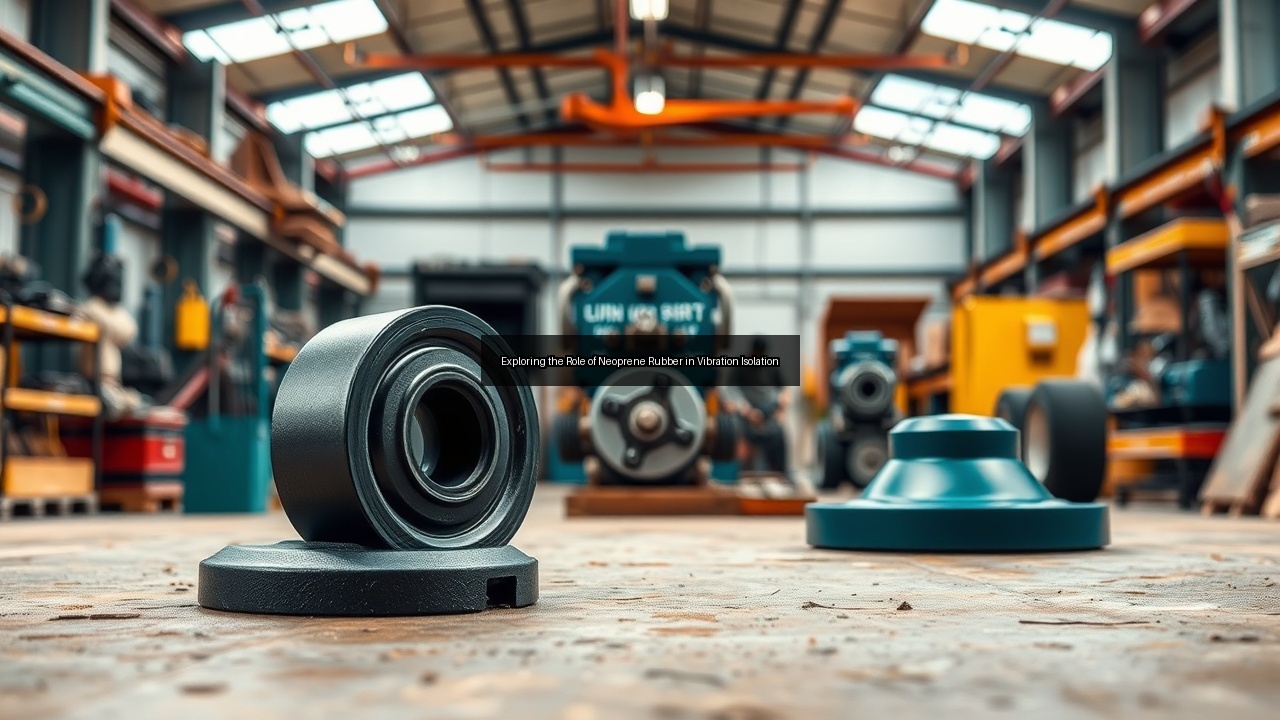
Exploring the Role of Neoprene Rubber in Vibration Isolation
Understanding Vibration and Its Impact on Machinery
The Nature of Vibration in Industrial Settings
Vibration occurs in every industrial setting, affecting machinery and equipment performance. It emerges from various sources, including rotating components, external forces, and uneven surfaces. When machinery operates, the inherent imbalance in components like engines and generators generates vibrations. These vibrations manifest as oscillations, which can travel through structures, affecting nearby equipment. Understanding the characteristics of these vibrations—such as amplitude and frequency—plays a crucial role in maintaining machine integrity. High-frequency vibrations can lead to wear and tear, while low-frequency vibrations often cause discomfort for operators and nearby personnel. Recognizing these nuances helps industries implement effective vibration isolation strategies.
Consequences of Excessive Vibration on Equipment
Excessive vibration significantly impacts machinery and equipment longevity. Over time, persistent vibrations contribute to fatigue failures in components, leading to costly breakdowns and repairs. Bearings, shafts, and other vital parts face increased stress, which can accelerate wear. Moreover, excessive vibrations can cause misalignment, resulting in operational inefficiencies and reduced performance. The noise generated from these vibrations can also disrupt workplace environments, affecting worker concentration and increasing stress levels. These consequences underscore the importance of addressing vibration issues proactively. Implementing effective vibration control measures not only extends equipment life but also enhances overall operational efficiency and safety.
Importance of Vibration Isolation in Machinery
Vibration isolation serves as a critical mechanism for protecting machinery from the adverse effects of vibrations. By effectively dampening and controlling vibrations, industries can safeguard equipment and improve performance. Vibration isolators absorb and dissipate the energy generated by machinery, preventing it from transferring to adjacent structures or equipment. This isolation minimizes wear on components, reduces noise, and enhances worker comfort. In settings where machinery operates continuously, such as factories and power plants, vibration isolation becomes essential. Industries that prioritize vibration control through effective isolation strategies experience fewer breakdowns, lower maintenance costs, and improved machinery reliability.
Neoprene Rubber: A Key Material for Vibration Isolation
Properties of Neoprene Rubber in Vibration Control
Neoprene rubber stands out as an exceptional material for vibration isolation due to its unique properties. This synthetic elastomer exhibits excellent resilience, flexibility, and durability, making it suitable for various industrial applications. Its ability to absorb vibrations effectively enhances its performance as an anti vibration rubber mount. Neoprene's inherent damping characteristics allow it to withstand dynamic loads while maintaining structural integrity. Additionally, neoprene offers resistance to environmental factors such as moisture, oil, and UV radiation, which extends its lifespan in diverse applications. Its versatility also enables customization, allowing manufacturers to develop tailored solutions for specific vibration control needs across industries.
Comparison with Other Elastomers: Natural Rubber vs. Neoprene
When comparing neoprene rubber with natural rubber, distinct advantages emerge. Natural rubber boasts superior elasticity, but it lacks the environmental resistance and durability of neoprene. Neoprene excels in applications requiring consistent performance under harsh conditions, where exposure to chemicals or temperature fluctuations is common. While natural rubber might offer better vibration absorption in certain scenarios, neoprene's ability to perform reliably over time makes it a preferred choice for many industrial applications. This comparison highlights the importance of selecting the right elastomer based on specific operational requirements and environmental factors, ensuring optimal vibration control and equipment protection.
Manufacturing Processes of Neoprene Rubber Components
The manufacturing of neoprene rubber components involves precise processes that enhance their effectiveness as vibration isolators. Common methods include compression molding, extrusion, and calendering, each tailored to produce specific shapes and sizes. Compression molding, for instance, allows for the creation of complex shapes often required in anti vibration mounts. Extrusion enables the production of continuous lengths of neoprene, suitable for applications such as pipe hangers and bumpers. These processes ensure that neoprene components maintain uniform properties, supporting their performance in vibration control applications. Quality control during manufacturing further guarantees that each neoprene rubber component meets stringent industry standards, fostering reliability in vibration isolation.
Applications of Anti Vibration Rubber Mounts
Use in Marine Environments: Protecting Boats and Equipment
In marine environments, anti vibration rubber mounts play a crucial role in protecting boats and equipment. The constant motion and exposure to harsh conditions create a challenging setting for machinery. Neoprene rubber mounts effectively isolate vibrations generated by engines and other onboard machinery, ensuring a quieter and more comfortable experience. These mounts also reduce the risk of structural damage to vessels by absorbing shock and minimizing the transmission of vibrations through the boat’s frame. By implementing neoprene rubber components, marine operators enhance equipment longevity and improve overall performance, making them invaluable in the boating industry.
Vibration Isolation in HVAC Systems: Enhancing Comfort and Efficiency
HVAC systems benefit significantly from vibration isolation, particularly through the use of neoprene mounts. These systems generate vibrations from compressors and fans, leading to noise and discomfort in occupied spaces. Anti vibration rubber mounts effectively dampen these vibrations, promoting a quieter environment. Additionally, vibration isolation in HVAC systems enhances energy efficiency by minimizing wear on components, resulting in lower operational costs. Neoprene rubber's resilience ensures that these mounts maintain their effectiveness over time, making them a reliable choice for HVAC applications. By investing in quality vibration isolation, building owners can significantly improve occupant comfort and system efficiency.
Role in Generators and Compressors: Ensuring Optimal Performance
Generators and compressors operate under significant mechanical stress, making vibration isolation essential for optimal performance. Anti vibration rubber mounts reduce vibrations generated during operation, preventing damage to internal components. Neoprene rubber mounts absorb and dissipate these vibrations, enhancing the reliability of generators and compressors. By implementing effective vibration control strategies, operators can extend equipment life, reduce maintenance costs, and ensure uninterrupted performance. The integration of neoprene rubber in these applications underscores its importance in achieving efficient and reliable machinery operation. This commitment to vibration reduction ultimately leads to higher productivity and enhanced operational efficiency in various industries.
Design Considerations for Vibration Isolation Mounts
Factors Influencing Stiffness and Frequency Response
Designing effective vibration isolation mounts requires careful consideration of stiffness and frequency response. Stiffness directly impacts how a mount reacts to dynamic loads; too much stiffness can lead to poor isolation, while too little may compromise load-bearing capabilities. The frequency response of a mount determines its ability to absorb vibrations at specific frequencies. Understanding the operational characteristics of the machinery involved is crucial in selecting appropriate materials and designs. Engineers must evaluate factors such as load weight, operational speed, and vibration frequency to create mounts that provide optimal isolation and vibration damping. A well-designed mount enhances machinery performance and protects equipment from excessive wear and noise.
Choosing the Right Diameter and Height for Mounts
Diameter and height play pivotal roles in the effectiveness of vibration isolation mounts. Selecting the right diameter ensures that the mount can adequately support the machinery while providing sufficient surface area for effective vibration absorption. Height influences the mount's overall stiffness and compression characteristics. Engineers must balance these dimensions, taking into account the specific application and load conditions. Customizing mounts to match the machinery's requirements enhances their performance, leading to better vibration isolation and noise control. Ultimately, proper selection of diameter and height contributes to the longevity and reliability of the machinery involved.
Integrating Neoprene Rubber with Stainless Steel and Wire Rope
Integrating neoprene rubber with stainless steel and wire rope enhances the functionality and durability of vibration isolation mounts. This combination leverages the strength of stainless steel with the vibration-damping properties of neoprene. Stainless steel provides structural integrity, allowing mounts to withstand heavy loads and dynamic stresses without failure. Wire rope complements this integration by offering flexibility and tensile strength, making it suitable for applications requiring movement and adjustment. The synergy between these materials creates robust anti vibration mounts that perform effectively in demanding environments, such as industrial machinery and transportation systems. This integration highlights the versatility of neoprene rubber in various applications, ensuring reliable vibration isolation.